
Iowa County Criminal Court Cases
Iowa County criminal court cases belong to the Iowa District Court for Iowa County, part of the Sixth Judicial District. Iowa uses one unified district court. Magistrates and district associate judges handle assigned initial, simple-misdemeanor, and other matters, while district judges hear felony-level cases. The system does not create a separate Williamsburg, Marengo, or North English municipal criminal docket. Selecting the right county is therefore more useful than searching for a city court that does not exist.
The Clerk of District Court is the custodian of filed Iowa County court records. The court sits at 901 Court Avenue, Marengo, IA 52301, and the clerk may be reached at 319-642-3923 extension 3. The file starts when a complaint or trial information reaches the court, not when a police officer writes an incident report. That line matters. The court record tracks formal counts, hearings, rulings, judgment, and sentence, while the sheriff or city police keeps the agency narrative.
The Iowa Judicial Branch court directory identifies the clerk path and current court details.
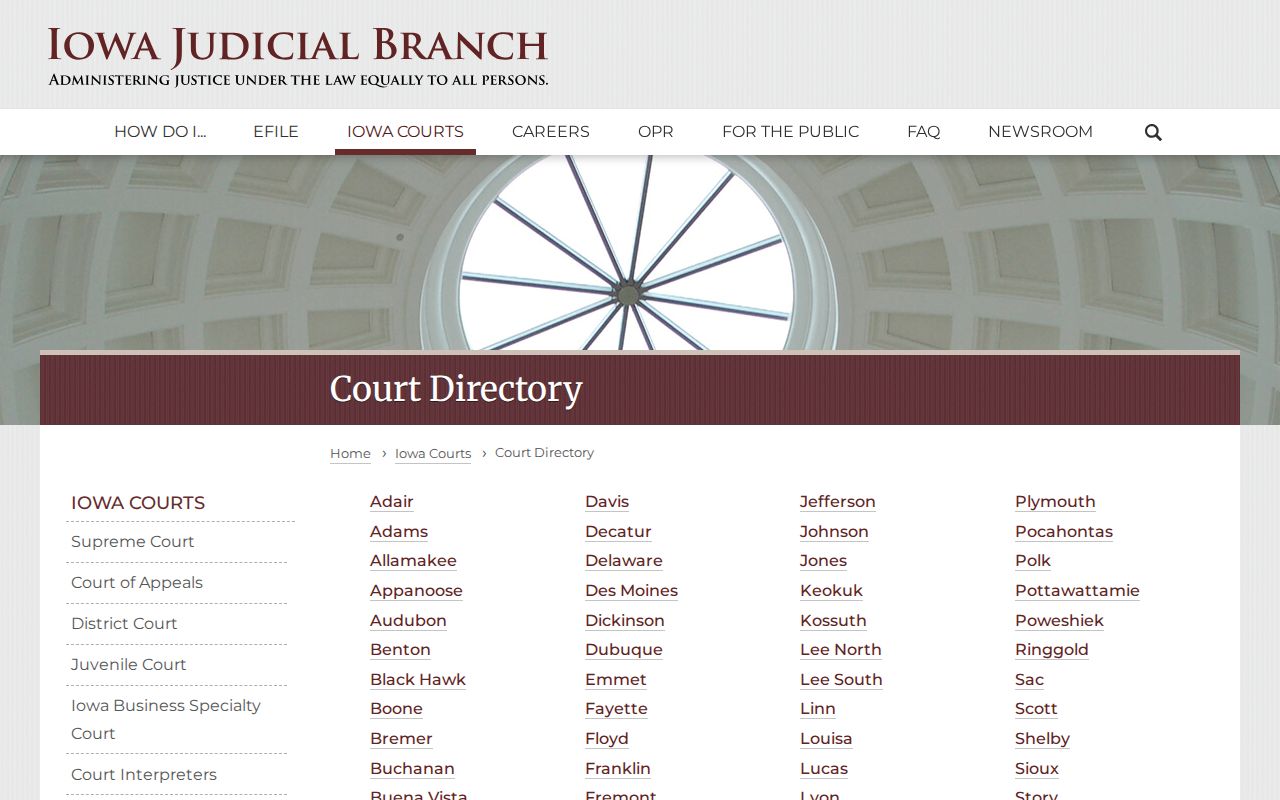
That directory is the sound place to confirm a court contact before relying on an old name, judge assignment, or office listing.
Iowa County Court Clerk Counter
The courthouse counter is the fallback when an Iowa County case appears in the index but the needed filing does not. Give the clerk the complete case number, the document name if known, and the filing date. Ask whether the item can be inspected, copied, or certified and whether a charge applies before ordering. Research did not identify an Iowa County-specific copy or certification fee, so a requester should not assume a rate.
The courthouse is a two-story stone building dating to 1892, but its role is current: it remains the main public records building for Iowa County court files. General county hours are weekdays from 8:00 a.m. to 4:30 p.m.; court-counter hours and closures should be confirmed before travel. The county attorney is nearby at 888 Court Avenue, but proximity does not make that office the clerk. Prosecutors create charging papers and represent the state. The clerk maintains the judicial file.
The official Iowa County court page shows the county-specific court access point.

Its county label also helps prevent a common error: Iowa City is in Johnson County, not Iowa County.
Searching Iowa County Case Records
Iowa Courts Online is the first public index for an Iowa County criminal case search. It can show the case header, participants, counts, events, judgments, money entries, and public status data. A name search works best with exact spelling and a first name. A known case number is stronger because it points to one file. Searchers should read every count separately; one count can be dismissed while another ends in a plea or judgment.
- Open the trial-court search and choose Iowa County as the county filter.
- Enter the full case number, or search by last name and narrow with a first name.
- Check the case type, initiating date, title, and county before assuming a name match.
- Open the details and read each charge, disposition, docket event, judgment, and financial entry.
- Use EDMS or contact the Iowa County clerk with the full number when a filed document is needed.
| Field Label | Type | Required | Notes |
|---|---|---|---|
| Search scope or case type | Tab or selection | Varies | Choose the trial-court area that fits the search. |
| County | Dropdown | Needed to localize | Select Iowa County; statewide searching may also be available. |
| Case number | Text | Alternative | Use the full court number when known. |
| Last name | Text | Name search | Spelling and punctuation affect the match. |
| First name | Text | Optional | Helps narrow common names. |
| Search or reset | Button | No | Runs the query or clears the fields. |
The official interface shows how the public Iowa County case index is organized.
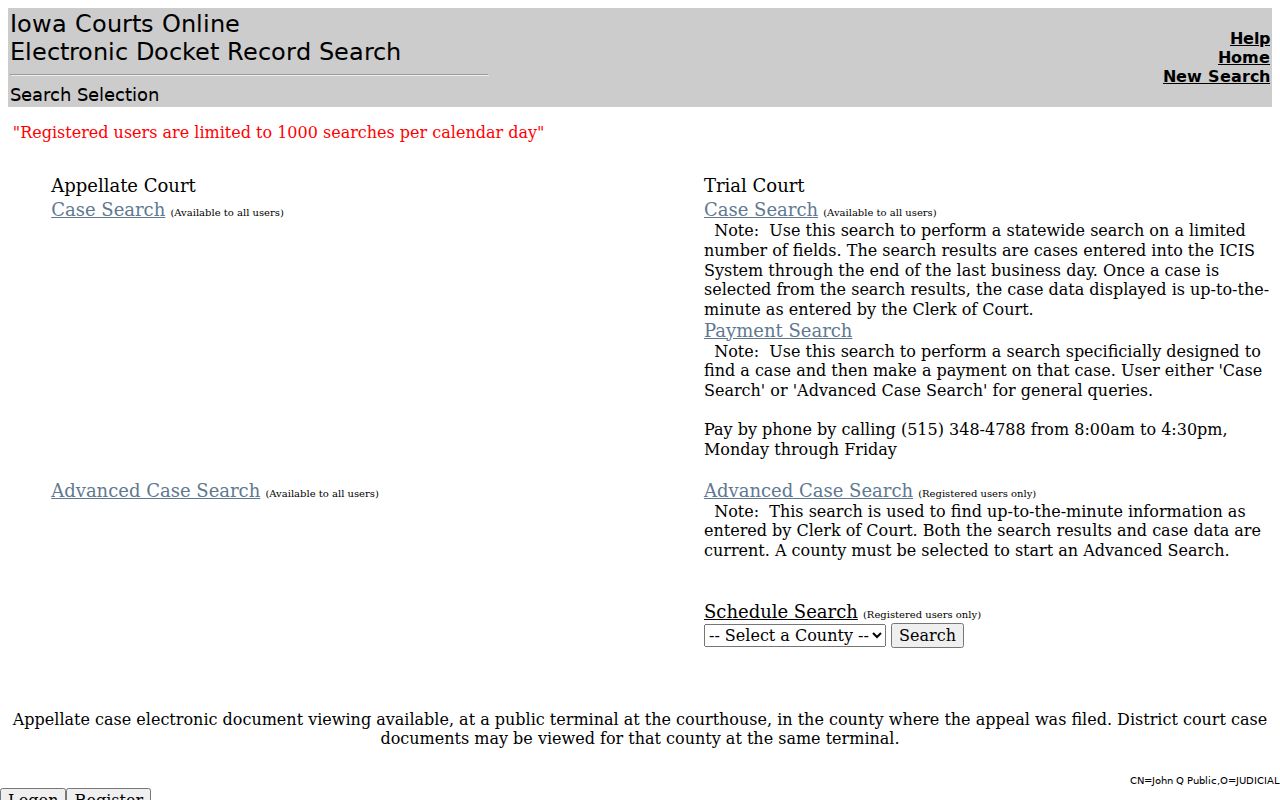
The screen is an index gateway, not a promise that every filed PDF is open to anonymous users.
Iowa County EDMS Document Access
Iowa Courts Online and the Iowa Electronic Document Management System serve related but distinct jobs. The public index helps locate an Iowa County case and read public detail. EDMS supports electronic filing and document access for registered users, but registration does not defeat a seal or statute. A docket may list an order while the document itself remains gated, restricted, or unavailable through anonymous access.
If a link does not open, first confirm that the user is signed in through the correct access channel. Then note the exact event title and date and ask the Iowa County clerk whether the document is public. Older or non-digitized material may require a clerk request. Juvenile files, expunged matters, protected personal identifiers, and court-restricted papers cannot be obtained merely by asking for the online copy.
The Judicial Branch explains registered access on its EDMS and eFile page.
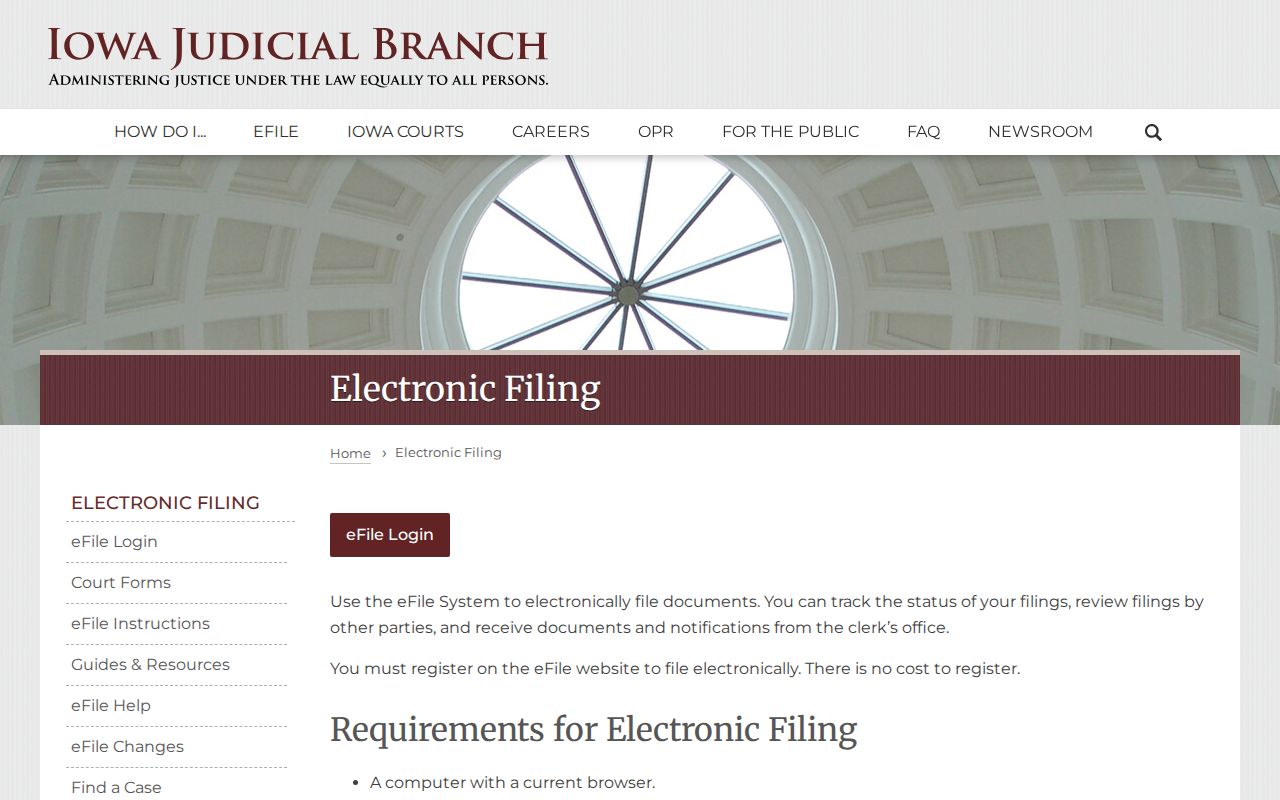
This split explains why a visible docket line and an accessible court document are not always the same thing.
Inside an Iowa County Case File
An Iowa County court case file is event-centered. It can connect a complaint or trial information to appearances, attorney entries, motions, hearings, pleas, orders, a judgment, sentence terms, costs, and an appeal reference. The most useful fields depend on the question. A case number fixes identity; individual count dispositions show outcomes; the docket supplies chronology; and the judgment or sentencing order states the court’s decision.
| Case Number & Court | Identifies the Iowa County file, court, case type, title, status, and initiating date. |
|---|---|
| Charging Document | Shows the complaint, trial information, or indictment and the counts formally placed before the court. |
| Docket Entries | List filings, hearings, orders, pleas, judgment events, sentencing, and financial activity by date. |
| Participants | May identify party roles, the prosecuting state, and attorneys when those fields are public. |
| Disposition & Judgment | Shows how each count ended, such as conviction, acquittal, dismissal, or another recorded result. |
| Sentence & Conditions | May state confinement, probation, fines, costs, restitution, and related public terms. |
A booking entry cannot fill these gaps. It records intake charges and custody facts before the prosecutor and court complete their work. For the arrest-side record trail, use the county’s arrest lookup details.
Iowa County Charge Dispositions
One Iowa County case may contain several counts, and each can end in a different way. “Disposition” means the result for a charge or case. A dismissal ends a count without a conviction, subject to rules on refiling. An acquittal is a not-guilty decision. A deferred judgment is not an ordinary judgment of guilt: the court delays judgment while the person completes set terms, and Iowa law gives that result its own treatment.
Read the charge description, statute, offense level, plea, and disposition as one set. Intake labels can change after review. Prosecutors may amend or replace a charge, so the first allegation should not be quoted as the final court result. Financial fields also require care. A displayed fine, cost, surcharge, restitution line, balance, or satisfaction status answers a money question, not the whole outcome. The event date helps show whether a value is current or tied to an earlier order.
- Trial information
- The Iowa prosecutor’s formal charging document for an indictable offense.
- Arraignment
- The stage when charges and a plea are addressed.
- Disposition
- The recorded way a count or case ended.
- Docket
- The dated register of filings and court events.
How a Criminal Case Moves
An arrest or citation may produce an agency record first. The court trail begins with a complaint. In an indictable Iowa County matter, prosecution can move through trial information or indictment. The first appearance addresses rights, counsel, and release. Arraignment records the plea. Motions, discovery, pretrial events, a negotiated plea, or trial then add entries to the docket.
Judgment and sentencing create the orders that establish the outcome, punishment, costs, and supervision terms. An appeal can shift later work to the Iowa Court of Appeals or Iowa Supreme Court, while the Iowa County trial docket remains the starting record. Exact timing depends on the facts and court schedule; the research does not support a fixed county timetable.
Case flow: Charges Filed › Arraignment › Pretrial › Plea or Trial › Disposition › Sentencing
Note: A docket stage shows where the file has moved, not a forecast of how any Iowa County charge will end.
Iowa County Attorney Versus Clerk
The Iowa County Attorney prosecutes state-law and county-ordinance violations. That office may create trial information, motions, or other prosecution material that later enters the court file. It does not act as private counsel and is not the general custodian for every criminal court document. A request for the judge’s order, docket, judgment, or certified case copy belongs with the Clerk of District Court.
The distinction prevents a wasted stop. The attorney’s office is at 888 Court Avenue, Marengo, and lists weekday hours from 8:00 a.m. to 4:30 p.m. and phone 319-642-5521. The court file is at 901 Court Avenue. Questions about the state’s charging role may fit the prosecutor; public access to the judicial record fits the clerk.
The county’s Iowa County Attorney page describes the prosecutor’s official duties.
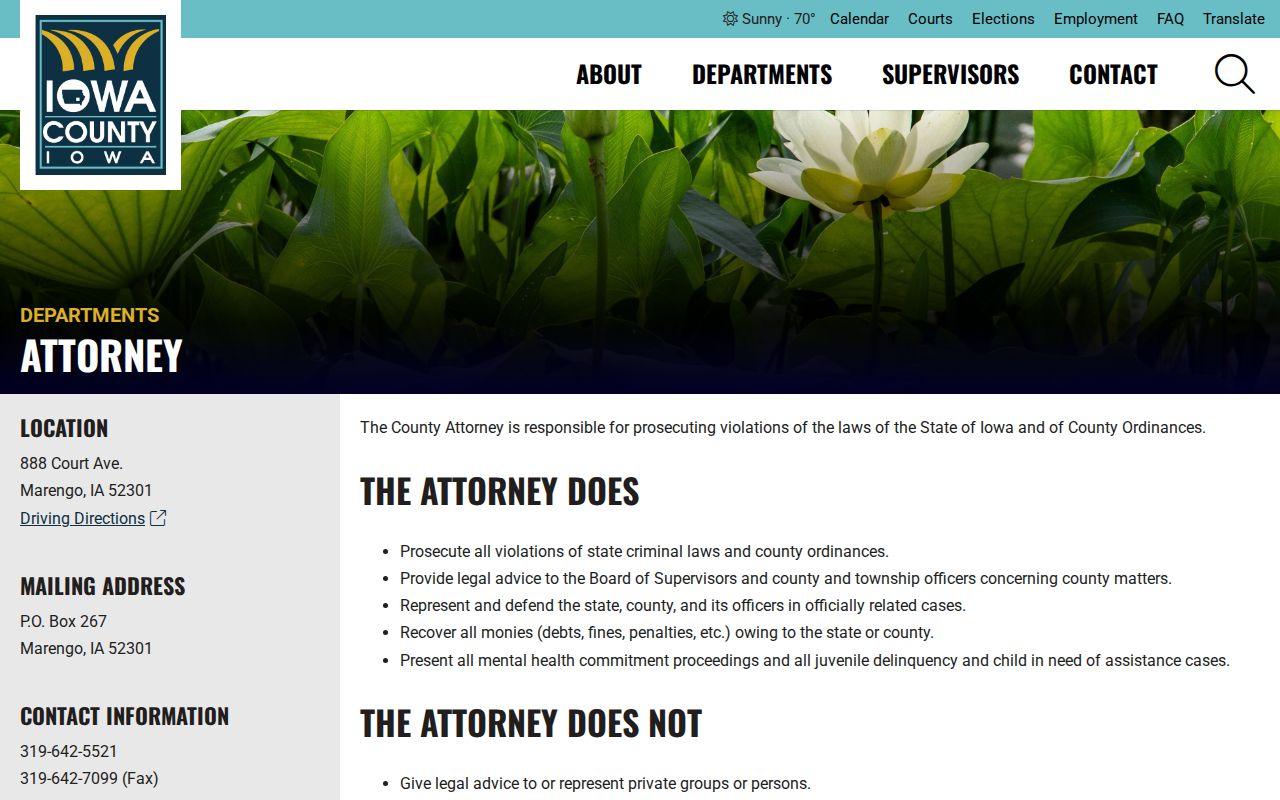
It helps separate prosecution work from the clerk’s record-custody role.
Iowa County Court Forms
Some Iowa County case needs extend past reading the docket. A person may need a current Judicial Branch form for a filing, fee waiver, or a limited expungement route. Iowa has no one broad remedy that clears every adult conviction. Chapter 901C covers specified expungement paths, and section 907.9 addresses discharge after deferred judgment and expungement of the court record.
Start with the case number and current statute, then ask the clerk how the form must be filed through EDMS or at the counter. Do not infer eligibility from a portal label. A dismissal is not itself an expungement order, and a court-level deferred-judgment record may be treated differently from the DCI history.
The Iowa Judicial Branch court forms collection is the official place to locate current forms.
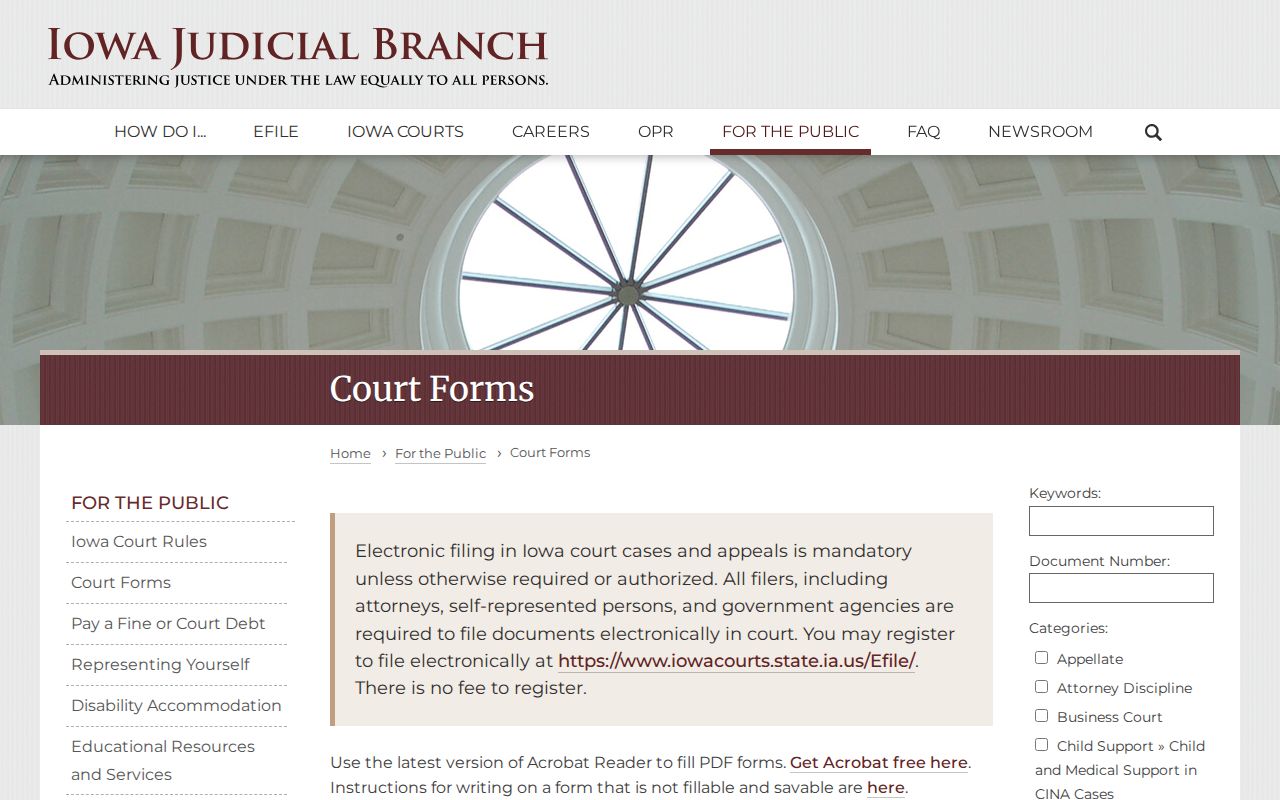
Using the current form avoids relying on an old copy whose filing directions may have changed.
Case Record Access & Restrictions
Iowa Code chapter 22 supports access to public records, but “public” does not mean that each Iowa County court field must appear online. Section 22.7 protects categories of confidential information. Chapter 692 controls criminal-history dissemination, while Iowa Court Rule 16.201 and related rules govern electronic filing and access. Juvenile matters, sealed or expunged cases, protected addresses, personal identifiers, and other court-restricted material may be withheld or redacted.
When an Iowa County criminal case is missing, check spelling, county, case type, and number first. Then use the clerk, not a third-party database, to ask whether the file is older, non-digitized, restricted, or unavailable. A clerk can explain access status but cannot release a record that the law or an order makes confidential. The official Iowa Courts Online help material also distinguishes public fields from added subscription access; neither tier cancels legal restrictions.